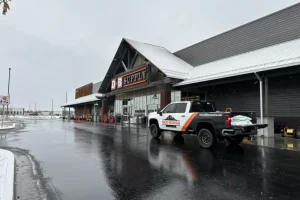
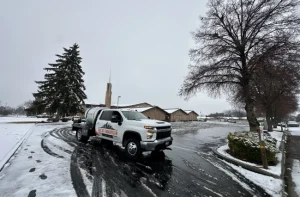
When winter arrives in Idaho, freezing temperatures, snow, and ice can make maintaining commercial asphalt pavement more challenging. Traditional asphalt repairs often depend on specific temperature and weather conditions, leaving property managers searching for reliable solutions when pavement damage occurs during the colder months.
Fortunately, mastic asphalt repair offers an effective option for addressing certain pavement issues during winter and cold-weather conditions.
At Rocky Mountain Services, we understand that commercial parking lots do not stop experiencing wear and tear when temperatures drop. From potholes and deteriorating pavement to damaged utility cuts and high-traffic areas, winter asphalt maintenance is essential for keeping commercial properties safe and functional.
Here is what property owners and managers should know about mastic repair and its role in winter pavement maintenance.
What Is Mastic Asphalt Repair?
Mastic asphalt repair is a specialized pavement repair method that uses a highly workable, asphalt-based material designed to fill and repair damaged areas of pavement.
Unlike traditional hot-mix asphalt, mastic materials typically contain a higher proportion of asphalt binder and fine aggregate, creating a dense, cohesive material that can be applied to certain pavement defects.
Depending on the product and application, mastic repair can be used to address:
- Potholes and localized pavement deterioration
- Utility cuts and trench repairs
- Damaged asphalt around manholes and catch basins
- Surface defects and pavement transitions
- Areas experiencing water infiltration
Mastic repairs are particularly useful for targeted pavement maintenance where a full asphalt replacement may not be necessary.
Why Is Mastic Repair Beneficial During Winter?
One of the biggest challenges with winter asphalt maintenance is temperature.
Traditional hot-mix asphalt generally requires suitable temperatures and proper compaction to achieve a durable repair. Cold pavement and freezing conditions can make these processes more difficult.
Certain mastic repair systems are specifically designed to perform in colder weather, making them a valuable option for winter pavement maintenance.
1. Cold-Weather Repair Capabilities
Depending on the product being used, mastic repair materials may be applied in temperatures that are unsuitable for conventional asphalt repairs.
Some specialized mastic products can be installed in freezing conditions, allowing contractors to address pavement damage without waiting for spring.
This is particularly important for commercial properties where damaged pavement cannot simply be left untreated for several months.
Important: Cold-weather installation depends on the specific mastic product, pavement condition, surface preparation, and manufacturer requirements. Not every mastic material is suitable for application in freezing temperatures.
2. Helps Prevent Further Pavement Deterioration
Winter weather can quickly make existing pavement damage worse.
When water enters cracks or damaged asphalt and freezes, it expands and places additional stress on the pavement. Repeated freeze-thaw cycles can contribute to expanding cracks, potholes, and further deterioration.
Mastic repair can help address certain damaged areas and reduce opportunities for water to enter the pavement when properly installed.
Taking care of localized pavement damage during winter can help prevent more extensive repairs from being needed in the spring.
3. Helps Maintain Commercial Parking Lot Safety
Potholes, uneven pavement, and damaged asphalt can create safety concerns for vehicles and pedestrians.
For commercial property managers, maintaining safe parking areas is an important responsibility throughout the year.
Mastic repair can provide a practical solution for addressing certain pavement defects during winter, helping maintain smoother driving surfaces and reduce potential hazards.
How Is Mastic Asphalt Repair Performed in Winter?
Although every project is different, a typical mastic repair process includes several important steps.
Step 1: Inspect the damaged pavement
The repair area is evaluated to determine the extent of the damage and whether mastic is an appropriate repair method.
Step 2: Prepare the repair area
Loose asphalt, debris, and deteriorated material are removed. Proper preparation is essential for achieving a durable repair, especially during cold weather.
Step 3: Address moisture and surface conditions
The repair area must meet the material manufacturer’s requirements for moisture, temperature, and surface preparation. Snow, ice, and unsuitable moisture conditions must be addressed before installation.
Step 4: Apply the mastic material
The appropriate mastic product is installed according to its specifications, filling the damaged area and creating a cohesive repair.
Step 5: Finish and inspect the repair
The material is finished to provide a suitable pavement surface and inspected to ensure the repair meets project requirements.
Following proper installation procedures is essential to achieving the best possible performance from a winter mastic repair.
Is Mastic Repair a Permanent Solution?
Mastic repair can provide a durable pavement maintenance solution when the correct material is selected and properly installed.
However, the longevity of any asphalt repair depends on several factors, including the condition of the surrounding pavement, the severity of the damage, traffic loads, drainage, and installation conditions.
In some situations, mastic repair may be an effective long-term solution. In others, it may serve as a preventative or temporary repair until more extensive asphalt work can be completed during warmer weather.
A professional pavement evaluation can help determine the best approach for your property.
Schedule Winter Mastic Repair with Rocky Mountain Services
Winter weather does not mean commercial asphalt maintenance has to stop.
Mastic asphalt repair can provide property owners and managers with an effective option for addressing certain pavement problems during colder months, helping protect their investment and maintain safer parking areas.
Rocky Mountain Services provides commercial asphalt maintenance solutions throughout Boise and the Treasure Valley, helping businesses maintain their parking lots through every season.
If your commercial property has potholes, damaged asphalt, or pavement concerns this winter, our team can evaluate the condition of your pavement and help determine whether mastic repair is the right solution.
Don’t wait until spring to address pavement damage.
Contact Rocky Mountain Services today to discuss your winter asphalt maintenance needs.
Visit rmserviceco.com to learn more about our commercial asphalt maintenance services.
Rocky Mountain Services | Commercial Asphalt Maintenance | Boise & the Treasure Valley