Your parking lot is one of the most used—and most overlooked—assets on your property. Whether you manage a retail center, office building, HOA, medical facility, or industrial site, your asphalt parking lot handles constant traffic, weather exposure, and heavy loads every day.
Ignoring routine parking lot maintenance may seem like a way to save money in the short term. In reality, it often leads to major asphalt repairs, premature replacement, and increased liability risks.
Let’s break down the real cost of neglecting asphalt maintenance—and how a proactive plan can protect your investment.
Why Parking Lot Maintenance Matters More Than You Think
Your parking lot is often the first impression customers and tenants have of your property. Cracked pavement, potholes, pooling water, and faded striping send the wrong message about your business.
Beyond appearance, neglected asphalt creates:
-
Trip and fall hazards
-
Vehicle damage risks
-
ADA compliance issues
-
Drainage problems
-
Accelerated pavement deterioration
Routine asphalt maintenance helps prevent these issues before they escalate.
How Small Cracks Turn Into Major Expenses
Asphalt naturally expands and contracts with temperature changes. Over time, this movement causes surface cracks. When cracks are left untreated, water seeps into the base layer beneath the asphalt.
Here’s what happens next:
-
Water weakens the foundation.
-
Freeze-thaw cycles expand the cracks.
-
Sections of pavement begin to fail.
-
Potholes develop.
-
Large areas require patching or replacement.
What could have been an affordable crack filling service becomes a costly structural repair.
Preventative crack sealing is one of the most affordable asphalt maintenance services available—and one of the most important.
Sealcoating: Your Pavement’s Protective Shield
Sealcoating is often misunderstood as purely cosmetic. While it does restore that rich black finish, its real value lies in protection.
Sealcoating protects your parking lot from:
-
UV oxidation
-
Water penetration
-
Oil and fuel spills
-
Surface wear from traffic
Without sealcoating, asphalt dries out, becomes brittle, and deteriorates faster. Most commercial parking lots benefit from sealcoating every 2–3 years, depending on traffic volume and climate conditions.
Routine sealcoating can significantly extend the life of your asphalt surface and delay the need for resurfacing.
The Hidden Liability of Damaged Asphalt
Property owners are responsible for maintaining safe conditions. Cracks, potholes, and uneven surfaces increase the risk of accidents.
Slip-and-fall claims and vehicle damage complaints can quickly exceed the cost of regular parking lot maintenance. Investing in preventative asphalt repair not only protects your pavement—it protects your business.
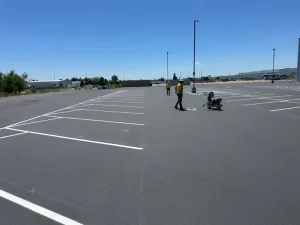
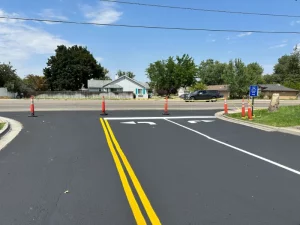
Fresh striping is also critical. Clearly marked parking stalls, fire lanes, ADA spaces, and directional arrows improve traffic flow and reduce confusion.
The Cost Comparison: Maintenance vs. Replacement
Many property managers delay asphalt maintenance because they assume it’s expensive. However, the numbers tell a different story.
-
Crack filling & sealcoating: Low cost per square foot
-
Patching & resurfacing: Moderate cost
-
Full parking lot replacement: Significant capital expense
Routine maintenance can extend pavement life by 10–15 years or more. That’s a major return on investment.
When asphalt is maintained consistently, you stay in control of your budget instead of facing unexpected emergency repairs.
Signs Your Parking Lot Needs Asphalt Maintenance
If you notice any of the following, it’s time to schedule an inspection:
-
Visible cracks spreading across the surface
-
Faded gray color (oxidation)
-
Standing water after rain
-
Small potholes forming
-
Faded or hard-to-see striping
-
Uneven or crumbling edges
Addressing these issues early prevents more serious damage.
Creating a Proactive Asphalt Maintenance Plan
The best approach to parking lot maintenance is proactive—not reactive. A structured maintenance plan may include:
-
Annual pavement inspections
-
Scheduled crack filling
-
Sealcoating every few years
-
Prompt pothole repair
-
Regular restriping
This type of preventative pavement maintenance keeps your property looking professional and functioning safely year-round.
Why Work With a Professional Asphalt Contractor?
An experienced asphalt maintenance contractor will evaluate your pavement condition and recommend cost-effective solutions—not unnecessary replacements.
Look for a company that:
-
Specializes in asphalt maintenance, not just paving
-
Uses commercial-grade materials
-
Communicates clearly and provides detailed proposals
-
Prioritizes long-term pavement health
A knowledgeable contractor becomes a partner in protecting your property investment.
Protect Your Investment Before It Becomes a Problem
Your parking lot is a major asset. With consistent asphalt maintenance—including crack filling, sealcoating, patching, and striping—you can dramatically extend its lifespan while improving safety and curb appeal.
Delaying maintenance almost always results in higher costs down the road. Taking action today helps you avoid expensive repairs tomorrow.
If you’re unsure about the current condition of your pavement, scheduling a professional parking lot inspection is the first step toward a smarter, more cost-effective maintenance plan.